
- 21 mai
- 2026
Nature-Demo Project Partners Gathered in Brașov for Three Days of Collaboration and Field-Based Learning
How can cities become more resilient to climate change through nature-based solutions? This was one of the central questions that guided the 29th consortium meeting of the Horizon Europe Nature-Demo project, held in Brașov.
Over three days, partners from across Europe came together in Romania for a programme dedicated to collaboration, exchange of experience, and direct learning in the field. The meeting brought together researchers, universities, public authorities, and practitioners working jointly to test, develop, and validate nature-based solutions for critical infrastructure that is more resilient to climate change.
For Propark – Foundation for Protected Areas, hosting this meeting in Brașov was an important opportunity to show how ideas discussed at European level can be translated into concrete, visible, and applicable solutions in cities.
Urban Green Spaces as Demonstration Sites
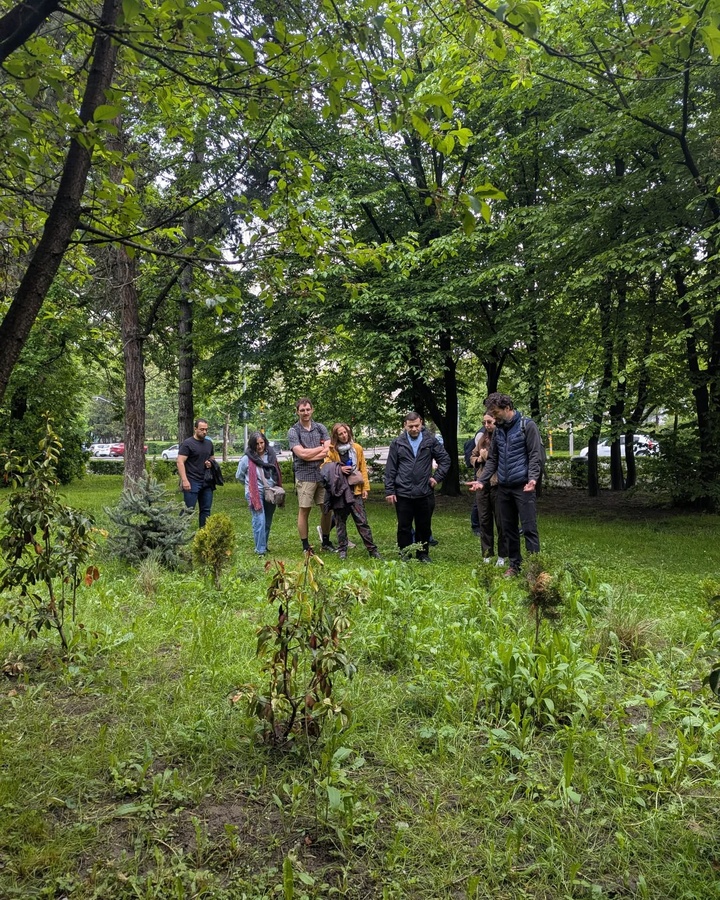
One of the important moments of the meeting was the field visit to the eco-responsible green spaces developed by Propark in Brașov as demonstration sites within the Nature-Demo project.
These spaces were designed as practical examples of nature-based solutions in the urban environment. They show how green areas in the city can be reimagined so that they support biodiversity, contribute to ecological functionality, help adaptation to climate change, and create healthier relationships between people and nature.
In the field, the partners were able to observe directly how seemingly small interventions in urban space can have a broader significance: for thermal comfort, air quality, water infiltration, pollinators, education, and the way communities relate to nature in the city.
Learning Directly in the Field
Beyond the workshops and technical discussions, the visits to the demonstration sites created a valuable space for reflection and exchange of ideas. In such moments, nature-based solutions no longer remain abstract concepts, but become concrete places, with soil, plants, people, design decisions, maintenance challenges, and real questions about the future of cities.
For the consortium partners, Brașov offered a practical context in which both the potential and the limitations of urban nature-based interventions could be discussed. How do we choose the right species? How do we design green spaces so that they are useful both for biodiversity and for the community? How do we ensure that these interventions are understood, accepted, and cared for in the long term?
These questions are essential for the Nature-Demo project, which aims to contribute to the development of solutions that can be applied in different contexts across Europe.
Nature as Infrastructure for the Cities of the Future
Climate change is placing increasing pressure on cities. Heatwaves, periods of drought, heavy rainfall, and the loss of urban biodiversity show that urban infrastructure needs to be rethought.
Nature-based solutions propose exactly this shift in perspective: nature is not merely urban decoration, but can become living infrastructure. Well-designed green spaces can contribute to temperature regulation, water management, biodiversity support, and the creation of healthier places for people.
Through its involvement in Nature-Demo, Propark contributes to this European conversation with its experience in education, conservation, protected area management, and working with communities. For us, nature in cities is part of the same broader story: the relationship between people, biodiversity, and the places where we live.
European Collaboration for Local Solutions
The meeting in Brașov once again confirmed the importance of collaboration between research, administration, organisations, and practitioners. Nature-based solutions need data and technical expertise, but also people who can adapt them to local realities, explain them to the public, and integrate them into the life of the city.
We thank all partners in the Nature-Demo consortium for the valuable discussions, openness, and collaboration. We also thank everyone who joined us during these days in Brașov and contributed to a meeting where learning happened not only in working rooms, but also in the field, where nature can become a solution.
Through Nature-Demo, we continue to explore how cities can become more resilient, healthier, and closer to nature.