
- 05 mar
- 2026
Specialists Trained in Ecological Connectivity Modelling within the ForestConnect Project
Wildlife needs connected habitats in order to feed, reproduce, move safely, and adapt to changes in the landscape. Protecting these links between habitats begins with well-trained specialists who are able to understand data, interpret models, and contribute to spatial planning that takes nature’s needs into account.
Through professional training programmes dedicated to specialists, Propark – Foundation for Protected Areas contributes to the development of the skills needed to conserve ecological connectivity and integrate it into management, assessment, and planning decisions.
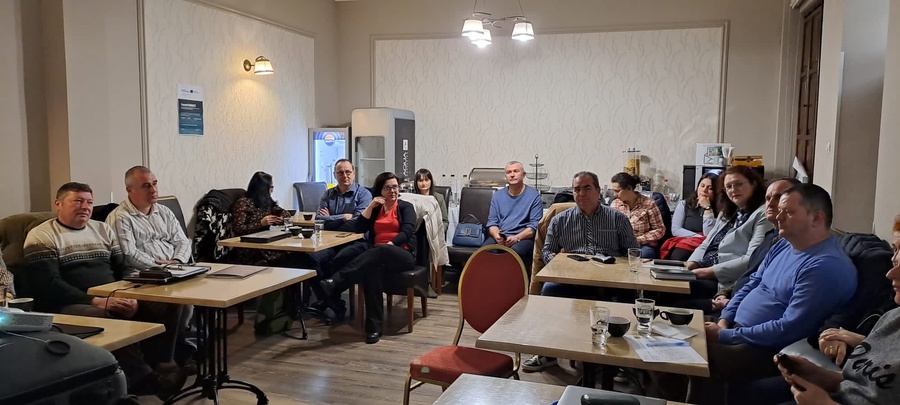
On 17–18 February, in Cluj-Napoca, Propark, through its trainers, facilitated a course dedicated to ecological connectivity modelling, organised within the ForestConnect project, implemented by WWF Romania.
Over the course of two days, 15 specialists worked with current tools and methods for modelling connectivity and interpreting data. The course was attended by experts in environmental impact assessment, professionals involved in identifying ecological corridors, and representatives of institutions with decision-making responsibilities.
Why Ecological Connectivity Matters
Protected areas cannot function in isolation. Wildlife species, especially those that require large territories, depend on functional links between habitats. When these links are disrupted by infrastructure, urban development, changes in land use, or other pressures, populations become more vulnerable.
Ecological connectivity helps maintain these links. It allows species to move between suitable areas, find resources, avoid genetic isolation, and better adapt to climate change.
For these aspects to be integrated into spatial planning, specialists are needed who can work with spatial data, understand landscape dynamics, and translate technical results into useful recommendations for public decision-making.
Applied Training for Better Decisions
The course in Cluj-Napoca had a strong practical component. Participants worked with methods for modelling ecological connectivity and interpreting results, so that the information obtained could be used in real-life contexts: impact assessments, identification of ecological corridors, spatial planning, or protected area management.
This approach is essential for Propark. Professional training is not only about transmitting concepts, but about building skills that can be used directly in the field, in institutions, and in decision-making processes.
In the case of ecological connectivity, these skills can make the difference between planning that fragments habitats and planning that maintains the links between them functional.
ForestConnect: Forest Connectivity for Large Carnivores
The training is part of the ForestConnect project – Towards a Climate-smart Forest Connectivity for Large Carnivores in the Balkan-Carpathian-Dinaric Region, funded through the Interreg Danube Region Programme.
The project aims to contribute to maintaining and improving forest connectivity for large carnivores in the Balkan-Carpathian-Dinaric region, in a context where climate change and pressures on habitats make data-based planning and collaboration between specialists, institutions, and organisations increasingly important.
The course was carried out within the project implemented by WWF Romania, together with its partners USAMV Cluj-Napoca and the Cluj County Environmental Directorate.
Skills for the Future of Conservation
For Propark, ecological connectivity is a topic that clearly shows why professional training is essential in nature conservation. It is not enough to know where protected areas are on the map. We need to understand how habitats communicate with one another, how species move, and how our decisions can support or disrupt these processes.
Through such courses, Propark supports specialists working in conservation, planning, and environmental assessment to use current tools and contribute to better decisions for nature and communities.
Wildlife needs space, safety, and connected habitats. And for these conditions to be protected, we need people who can transform data, maps, and models into concrete conservation action.